
Neuromuscular Therapy in Warrington
Neuromuscular therapy is one of the most precise and effective techniques Ema uses for chronic pain, stubborn tension and referred pain patterns that do not respond to more general massage approaches. It works by identifying and treating trigger points, tight and hypersensitive spots within a muscle that can cause pain both locally and at a distance from where they actually sit.
You may have experienced this yourself. A tight spot in your upper back causing headaches. A knot in your glute sending pain down your leg. Tension in your jaw connected to pain behind your eye. The muscle is not always where the pain is felt, and neuromuscular therapy is specifically designed to find and address those connections.
Ema trained in neuromuscular therapy at Jing Advanced Massage Training and incorporates it within Advanced Clinical Massage sessions wherever it is the right tool for the job. It is never used in isolation. The orthopaedic assessment that begins every clinical appointment identifies which muscles and trigger points are involved before any hands-on work begins.
Conditions neuromuscular therapy can help with:
What Is a Trigger Point
A trigger point is a tight, contracted knot within a muscle that has become hypersensitive, often as a result of overuse, injury, poor posture, stress, or compensation patterns elsewhere in the body. When pressure is applied to a trigger point it typically produces a recognisable sensation, either sharp and local or a dull ache radiating out to another area entirely.
Trigger points form when muscle fibres get stuck in a contracted state and cannot fully release. Over time they restrict movement, reduce blood flow to the surrounding tissue, alter how surrounding muscles function, and generate persistent pain signals. Simply stretching or resting rarely resolves an active trigger point because the underlying contraction remains.
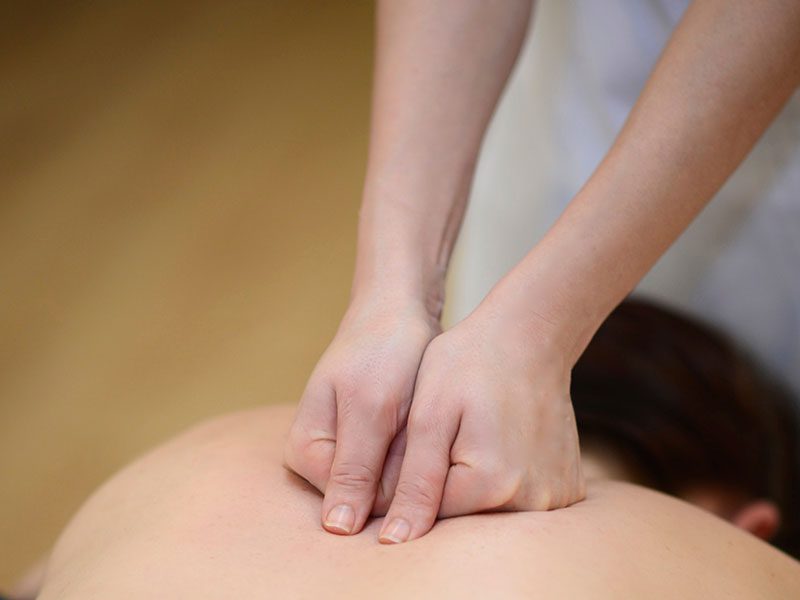
Neuromuscular therapy locates these points through careful palpation and applies sustained, precise pressure to interrupt the pain and contraction cycle, allowing the muscle to release and blood flow to return. The sensation during treatment is often described as a good hurt, pressure that is intense but recognisably useful rather than simply painful.
What Neuromuscular Therapy Can Help With
Chronic pain
Long-standing pain that has not responded to other treatments often involves active trigger points maintaining a persistent pain cycle. Neuromuscular therapy directly interrupts that cycle. Research into massage for chronic back pain found significant and lasting improvements in pain and function.
Referred pain patterns
Pain felt in one area of the body is frequently driven by trigger points in a completely different muscle. Neuromuscular therapy identifies and treats the source rather than the symptom, which is why it often resolves pain that other approaches cannot reach.
Headaches and migraines
Trigger points in the neck, upper back and jaw are a common driver of tension headaches and can contribute to migraine frequency. Treating them directly often reduces both the frequency and intensity of headaches over time.
Restricted movement
Active trigger points shorten the muscle they sit in and affect how surrounding muscles work. Releasing them restores normal range of motion and removes the compensation patterns that often lead to secondary injuries elsewhere.
Sports injuries and recovery
Trigger points develop readily in muscles that are repeatedly overloaded or have sustained injury. Addressing them accelerates recovery, reduces the risk of re-injury, and restores the muscle’s ability to work efficiently under load.
Sciatica and nerve pain
Piriformis syndrome, where the piriformis muscle compresses the sciatic nerve, is a classic neuromuscular therapy case. Releasing the piriformis and associated trigger points can significantly reduce sciatica symptoms without the need for more invasive intervention.
Frequently Asked Questions
Is neuromuscular therapy painful?
The pressure applied to a trigger point produces an intense sensation that most clients describe as a good hurt. It should feel recognisably useful rather than simply painful. Ema works within your tolerance at all times and will always adapt if something feels too sharp. Some mild soreness in the area is normal for 24 to 48 hours after treatment, similar to post-exercise fatigue, and typically clears quickly.
Can I book neuromuscular therapy on its own?
Neuromuscular therapy is not offered as a standalone bookable treatment. It is one of the techniques Ema draws on within an Advanced Clinical Massage session, selected where it is the right fit for your presentation. Most sessions combine neuromuscular therapy with myofascial release and other techniques depending on what your body needs that day.
How many sessions will I need?
This depends on how long the trigger points have been active and how complex the presenting pattern is. Some clients feel significant improvement after a single session. Chronic presentations typically benefit from a course of three to six sessions, with the most lasting results coming when sessions are spaced a week or two apart initially. Ema will give you a clearer sense of the likely course at your first appointment after the assessment.
What is the difference between neuromuscular therapy and deep tissue massage?
Deep tissue massage works through sustained pressure across broader areas of muscle tissue. Neuromuscular therapy is more specific, locating individual trigger points through careful palpation and applying targeted sustained pressure to release them. The two techniques complement each other and Ema often uses both within the same session depending on what she finds during the assessment.
Is neuromuscular therapy the same as trigger point therapy?
The terms are often used interchangeably and the techniques overlap significantly. Neuromuscular therapy is the broader clinical framework, which includes trigger point work alongside assessment of nerve function, postural mechanics and muscle balance. Trigger point therapy refers specifically to the hands-on technique of locating and releasing trigger points. Ema uses both within the same clinical approach.
What Our Clients Say
“I have been having treatments with Ema for over six months now for chronic back pain. I have tried many other forms of massage and physio but the myofascial release is the only thing that seems to work for me. Her knowledge of the human anatomy is mind blowing and she is able to detect exactly where the pain is coming from.”
Yvonne Spence Chronic Back Pain“I have only been 3 times with multiple complaints mainly migraine. Ema has helped me get from severe migraine clusters 3 to 4 times a month to being migraine free for 2 months. Not only that but my migraines when they do come are now not debilitating.”
Gemma Newton Migraines“After my first treatment with Ema I had the most relief from lower back pain after 10 months of constant pain. After each treatment I leave feeling stronger and always have the best night’s sleep.”
Jane Roberts Chronic Back Pain